Personal Injury | June 2, 2026 by JOSHUA D. ANDERSON
5 Causes of Car Accidents in WA State and Their Implications
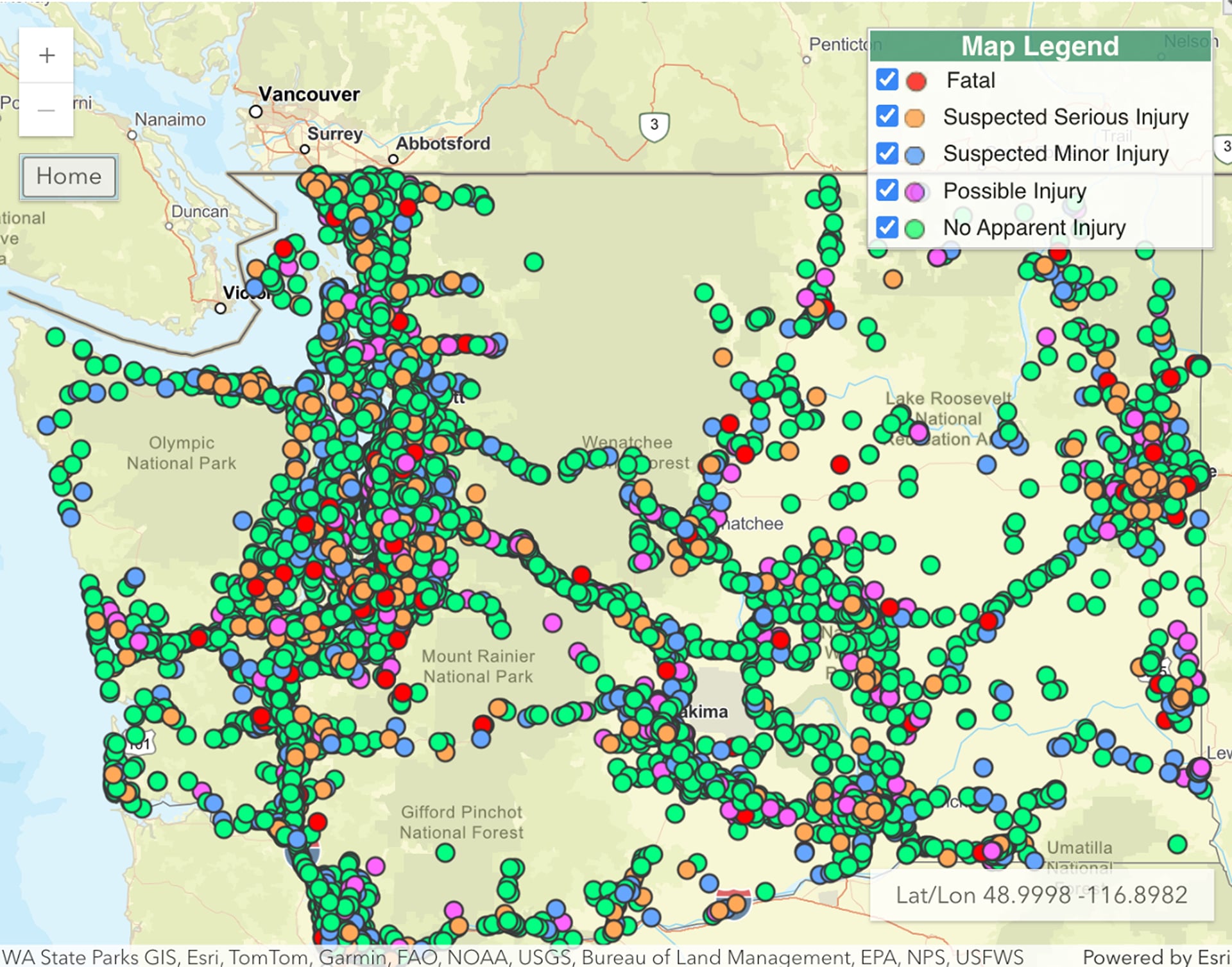
If you’ve been in a car accident in Washington, one of the first questions to answer is what caused the crash. That answer matters more than most people realize. In Washington, the cause of an accident determines who is at fault, what evidence is relevant, and what compensation may be available to you.
Below, we cover five causes that frequently appear in Washington crashes, what each one looks like on the road, and what it means for a personal injury claim.
Why the Cause of Your Accident Matters in Washington
Most people walk away from a crash thinking about what happened, but insurance companies and attorneys think about why, because understanding the cause of your accident is where building a claim begins.
Under RCW 4.22.005, Washington follows a pure comparative fault standard. That means fault is assigned as a percentage, and your recovery is reduced proportionally by your share of fault. Even if you were partially at fault, you can still recover, but the cause of the crash determines how that percentage is allocated.
The cause also shapes the entire legal investigation. It determines what physical evidence is relevant, which witnesses matter, whether a police report or citation is sufficient, or whether expert reconstruction is needed, and what records an attorney may need to obtain.
5 Common Causes of Car Accidents in Washington State
Crash data from the Washington State Department of Transportation (WSDOT) and the Washington Traffic Safety Commission consistently points to the same driver behaviors as the leading contributing factors in serious collisions. Here is what that data shows, and what each cause means if you’ve been injured.
1. Distracted Driving
Distracted driving was a contributing factor in 16,074 crashes in Washington in 2025, roughly 16% of the 100,572 total crashes reported statewide. Those crashes resulted in 104 fatalities and over 4,700 injuries ranging from minor to serious. Distractions fall into three categories:
- Visual: when the driver’s eyes are off the road
- Manual: when the driver’s hands are off the wheel
- Cognitive: when the driver’s mind is off the task of driving
Legal Implication:
Washington addresses distracted driving under two statutes.
- RCW 46.61.672 prohibits the use of a personal electronic device while driving and is a primary offense, meaning officers can cite a driver without any other violation.
- RCW 46.61.673 covers dangerously distracted driving more broadly (eating, adjusting a navigation system, reaching for something in the vehicle, etc.), but it is a secondary offense, enforceable only when a driver has already been stopped for something else.
A citation under either statute is documented evidence of negligence, but a citation isn’t required to establish fault. Because officers can only document what they observe at the scene, distraction is frequently underreported in police reports. However, distraction can also be proven through cell phone records, in-vehicle data systems, and witness accounts.
2. Speeding and Reckless Driving
Speed-related crashes in Washington produced 185 fatalities, roughly 30% of all fatalities, and 625 suspected serious injuries in 2025, across 673 fatal and serious injury crashes statewide, according to WSDOT’s Target Zero High Risk Behaviors report.
Legal Implication:
Speed-related negligence isn’t limited to drivers who exceed the posted limit. Washington’s basic speed rule, RCW 46.61.400, requires drivers to operate at a speed that is reasonable and prudent given actual conditions, meaning a driver traveling at the posted limit on a rain-slicked highway in reduced visibility may still be negligent under Washington law. A speeding citation in a police report is strong, direct evidence of negligence, but speed can also be established through event data recorders, skid mark analysis, and crash reconstruction. Reckless driving involving street racing or extreme speed can support a stronger negligence argument and, in some cases, a criminal referral running alongside the civil claim.
3. Impaired Driving
In 2025, impaired driving was a factor in 62% of Washington’s traffic fatalities, producing 381 deaths and 620 suspected serious injuries across 829 fatal and serious injury crashes statewide, according to WSDOT’s Target Zero High Risk Behaviors report. Those figures typically rise as toxicology results are finalized.
Legal Implication:
Under RCW 46.61.502, driving under the influence includes alcohol, cannabis, and other drugs. A DUI charge against the at-fault driver is among the strongest forms of negligence evidence in a personal injury claim, but a criminal conviction is not required to pursue a civil case. The standards of proof are different, and a civil claim can usually proceed regardless of how the criminal matter resolves. Toxicology reports and blood draw records are time-sensitive, and an attorney can help ensure that evidence is preserved and obtained before it becomes unavailable.
4. Failure to Yield
Intersection-related crashes produced 140 fatalities and 1,158 suspected serious injuries in 2025, across 1,131 fatal and serious injury crashes statewide. These crashes occur at controlled and uncontrolled intersections alike, as well as at merge points, left turns across oncoming traffic, and pedestrian crossings.
Legal Implication:
Fault in an intersection crash is often straightforward. The driver who failed to yield, ran a red light, or made an illegal turn is typically the at-fault party. That said, these cases can be contested. Both drivers may claim they had the right of way, traffic control devices were ambiguous, or the physical details of the crash itself are in dispute. For example, where the point of impact occurred, which vehicle entered the intersection first, or how fast each driver was traveling can all become contested questions. Intersection surveillance footage and independent witness accounts frequently become the deciding factor when driver accounts conflict.
5. Adverse Weather and Road Conditions
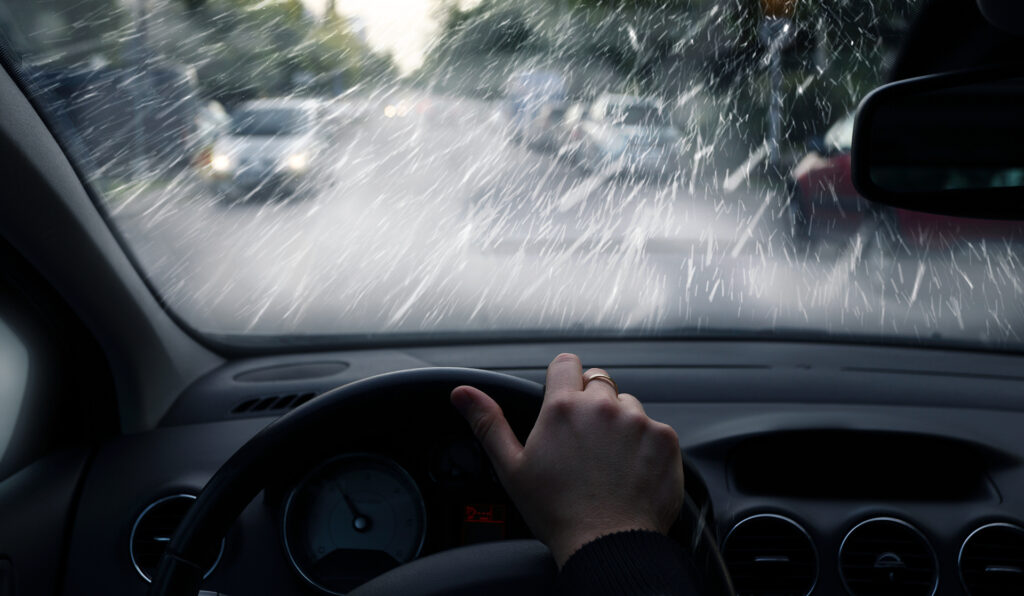
Persistent rain, standing water on major roadways, morning fog along the Puget Sound corridor, and black ice on elevated roadways and mountain passes are routine hazards for drivers in this region.
Legal Implication:
Weather is the most commonly misunderstood factor from a legal standpoint. Many drivers assume that if the weather contributed to a crash, the fault is reduced or eliminated. Washington law does not work that way. RCW 46.61.400 requires drivers to adjust their speed and behavior to match actual road conditions. A driver who hits black ice on an elevated interchange while following too closely is not automatically absolved because conditions were poor. If conditions required a slower speed or greater following distance, the driver had a legal obligation to make that adjustment. Failing to do so can still constitute negligence.
When the road condition itself contributed to a crash, such as an unrepaired pothole, inadequate drainage, or a missing warning sign, liability may extend beyond the other driver to WSDOT or a local municipality. Claims against government entities in Washington are subject to specific procedural requirements, including a tort claim notice under RCW 4.96.020, and the timeline for filing that notice is strict. If a road defect may have played a role in your crash, consulting an attorney early is important.
How Cause Is Established in a Washington Car Accident Injury Claim
Identifying the likely cause of a crash and proving it in a legal claim are two different things. Here are the main evidence types and what each one is actually useful for:
- Police reports are the starting point for most claims, but they are not the final word. Officers document what they observe and what drivers report at the scene. Distraction and impairment are frequently underreported or attributed to a less specific cause, particularly when the investigation is brief.
- Cell phone and device records are critical in distracted driving cases. These records can be subpoenaed to confirm whether a driver was actively using a device at or near the time of impact.
- Event data recorders are present in most modern vehicles. They capture speed, braking input, steering, and seatbelt status in the seconds before a collision. This data can confirm or contradict what a driver claims happened.
- Surveillance and dashcam footage are increasingly available at intersections and nearby businesses. This footage can be time-sensitive as some systems overwrite footage within days.
- Independent witnesses carry significant weight, particularly in disputed right-of-way cases where both drivers offer conflicting accounts.
- Expert reconstruction is used in serious injury and fatality cases when physical evidence requires professional interpretation to establish speed, point of impact, or driver behavior.
Learn More About the Cause of Your Washington Car Accident Today
The cause of a car accident shapes everything that follows. What evidence matters, how fault is allocated, and what compensation may be available all depend on what caused the crash in the first place. Whether your crash involved a distracted driver, adverse weather, or a driver who failed to yield, understanding the legal implications of that cause is the first step toward protecting your claim.
If you’ve been injured in a crash in Western Washington, Anderson Law is here to help. Contact Anderson Law | Injury Attorneys for a free case evaluation today. We’ve represented injury victims across Pierce and King Counties since 2008, and we don’t collect a fee unless you win.
The information contained on this website is intended for informational purposes only, and is not legal advice. Nothing in this website establishes an attorney-client relationship between us. Different facts can dramatically affect a legal opinion. You should consult an attorney for legal advice that pertains to your personal situation.

Joshua D. Anderson
Attorney Joshua D. Anderson grew up in Enumclaw, Washington with a close-knit family who instilled in him the values of faith, family, and hard work. Since a young age, Josh knew he wanted to be an attorney so he could advocate for others and always knew his focus would be personal injury. He completed his undergraduate degree at the University of San Diego and graduated Cum Laude from Seattle University School of Law. While pursuing his degree, Josh served as an extern for the Seattle City Attorney’s Office.